Welcome to the Lake Champlain region’s only bi-state citizens’ organization solely dedicated to protecting the health of the lake and accessibility to its waters.

The Lake Champlain Committee (LCC) has a 46-year history of science-based advocacy, education and collaborative action. We take a whole-lake approach to issues that affect this natural treasure, which boasts nearly 600 miles of shoreline in New York, Vermont and Quebec.

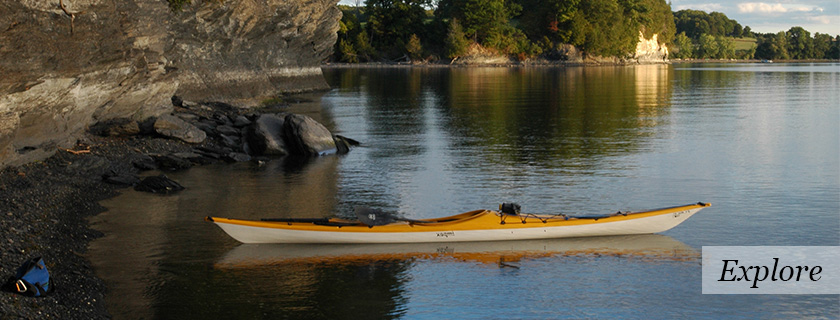
No matter how you choose to enjoy Lake Champlain, we invite you to explore this Web site to learn more about the lake's health, current ecologic challenges, and ways to access its resources, including the Lake Champlain Paddlers' Trail. As you explore, we hope you'll consider how you can personally make a positive impact on the quality of its water and ecosystem.

Read the latest edition of Ripples - LCC's E-Newsletter - online

Love the Lake? Learn more about it and catch up on lake news by reading Lake Ripples, LCC’s monthly E-newsletter online. Or you can get the latest issue delivered right to your email box by subscribing. Either way, Lake Ripples will keep you linked to important and timely information about the lake. Topics covered in recent issues include invasive species, new generation contaminants, muskie restoration efforts, loon monitoring, blue green algae updates, paddling information, upcoming lake events and more. You’ll also find natural history notes, our renowned Lake Look column and tips on how to keep the lake clean. 

Latest Updates

Alewife found in Lake Carmi

An alewife, a non-native invasive fish, has been confirmed in another waterbody in the Lake Champlain Basin. On New Year’s Day, ice-fisherman found an alewife in a walleye they had caught. It is likely that the fish got into Lake Carmi following an illegal bait bucket release, perhaps of fish originally caught in Lake Champlain. Anglers who accidentally or intentionally release bait fish from one body of water into another violate the law and threaten the ecological integrity of the waterbodies. In addition to invasive fish species, many fish diseases can be spread through illegal release of baitfish. Any fish caught or used as bait should be left in the water they originally came from unless they’re headed for a frying pan.


LCC’s Volunteer Algae Monitoring Program
Lauded at Regional Conference

Staff Scientist Mike Winslow was a guest speaker at the Northeast Regional Cyanobacteria Workshop in Chelmsford, MA in January. Mike spoke about the strengths and challenges of LCC’s volunteer algae monitoring program, an effort run in conjunction with the University of Vermont with funding from the Lake Champlain Basin Program. Attendees from throughout New England and New York got to hear about all the efforts our volunteers have put into monitoring over the last seven years. Many states have no established protocols for monitoring potentially toxic algae. Others rely on reports of blooms to initiate sampling. Only LCC’s approach on Lake Champlain provides weekly information about both the presence and absence of blooms throughout the summer. Many thanks to our dedicated volunteers and our project partners for making the program possible.


Champlain Bridge Design Chosen ~
New Ferry Service to Begin Soon!

A unique arch structure has been chosen for the Champlain Bridge replacement. Public preference played a significant role in New York and Vermont officials’ final bridge design recommendation. An online survey and public meetings held in December and January revealed overwhelming public support for the Modified Network Tied Arch alternative. Thanks to everyone who weighed in to advocate for bike and pedestrian corridors and a visually pleasing design that complements the surrounding land and waterscape and historic setting. Click here to see renderings of the new bridge. Construction will begin this spring, and is expected to be completed by the end of summer 2011 at a cost of approximately $75 million.

A new, temporary Lake Champlain ferry will be operational by the end of January near the former site of the Lake Champlain Bridge. There will be no cost to ride the ferry, which will operate 24-hours a day, seven days a week to help restore commuter, tourist and commercial traffic in the former Lake Champlain Bridge corridor. Crossing time is anticipated to be around 10 – 15 minutes. Ferry boats will accommodate approximately 40 to 50 cars as well as pedestrians and other vehicles.  


Paddling Pictures Needed

While the paddling season is still a few months away, LCC is busy working on the Trail and our 2010 guidebook. You can help in that effort by passing on some tales and photographs from your water outings for our website and publication use. Pictures of lake sunrises or sunsets, paddling picnics, gear loading, boats on or near the water, fishing trips, wildlife and your adventures on the Trail are welcome. Please email jpegs to lcc@lakechamplaincommittee.org with the name of the photographer, date taken, general location and a note indicating if we are free to use it in our publications and on the website. Thanks for your help!


Ice Safety Tips

Winter can be a wonderful time to explore the lake if you’re well prepared and appropriately cautious. Check out conditions and read up on ice safety before venturing out onto frozen waterways. Here are a few additional tips to help you stay safe:

-- Travel in a group, don’t go out onto the ice alone. -- Always leave word where you are going and when you expect to return. -- Have buoyancy on you (wear a life vest or have sealed bags in your backpack).-- Carry two ice picks or screwdrivers to help hoist yourself out of the water should you fall through. -- Carry an ice pole and rescue line.-- Bring a cell phone, air horn or a whistle to alert people if you fall through. -- Bring a set of dry clothes with you.

To find out about ice outings in your area, sign up for the updates from Nordic Skater.


Natural History Note – Lake Ice

Clear, cold, windless nights present ideal conditions for the actual freezing of ponds and lakes. The clear skies mean no cloud cover blanket to trap heat radiated away from the earth overnight. Colder air allows more heat to be transferred from the water. Absence of wind means that once the ice begins to form, wave action stirred by the wind will not interrupt the process.

Different bodies of water freeze at different times, and three of the principle factors influencing which lakes freeze and which don’t are the lake's location, volume, and area. Obviously a lake in Florida is less likely to freeze than a lake in the Northeast, but the other aspect of location is altitude. Colder temperatures at higher elevations make lakes in the mountains more likely to freeze. Volume is another relatively obvious factor. It takes more time and colder air temperatures to draw the heat out of a large volume of water than it does a small volume of water. For that reason, fairly small lakes that are very deep will take much longer to freeze. The influence of lake area is a little less obvious, but the expanse of a flat treeless surface provides no hindrance to gathering winds, which can break up the ice as it forms. Thus, large lakes will freeze more slowly than small lakes of a similar volume.


Lake Look ~ Steam Devils

Throughout the winter, arctic air masses move in over Lake Champlain. Frequently, a layer of fog develops at the interface between air and water. At first the fog is formless, but then a few strands will be pulled upward in strings like cotton candy. The wisps of steam carry heat and moisture to the air above. Occasionally, some of these strings begin to spiral and become taller and tighter, stretching up above the fog layer. The thin tubes are typically only a few feet wide, but can get much larger. The tubes can reach up to a hundred feet into the air, like small tornados over the lake.

The whirlwinds, usually referred to as steam devils, form via the same process that creates the little dust devils that whip across a parking lot or driveway on a summer’s day. It requires a layer of cold air sitting over a layer of warm air, and a breeze or wind. For the dust devils, the blacktop of the driveway absorbs sunlight and creates a warm layer underneath the air above it. For the steam devils, the warm lake underneath the arctic air mass provides the warmth.